About Us
Our Mission
The Global Wildfire Collective is committed to establishing and proliferating wildfire resilience and recovery strategies that produce multiple co-benefits to maximize well-being in both ecological and social systems.

About the GWC
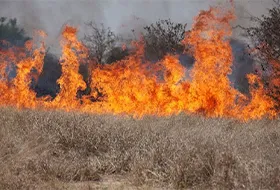
Globally, communities, policymakers, and land managers need urgent help to address the increasing incidence of extreme wildfire events and their impacts on humans and ecosystems. To best protect communities and ecosystems from destructive fires, actionable science-based solutions must be developed and implemented at multiple scales, and done so at an accelerated pace.
The GWC is a multinational interdisciplinary research and capacity-building group whose work cuts across topics, sectors and actors that drive and are subject to the impacts of wildfire. The GWC is committed to establishing and proliferating science-based wildfire resilience and recovery strategies across geographies.
Wildfire Exchange
Capacity Building
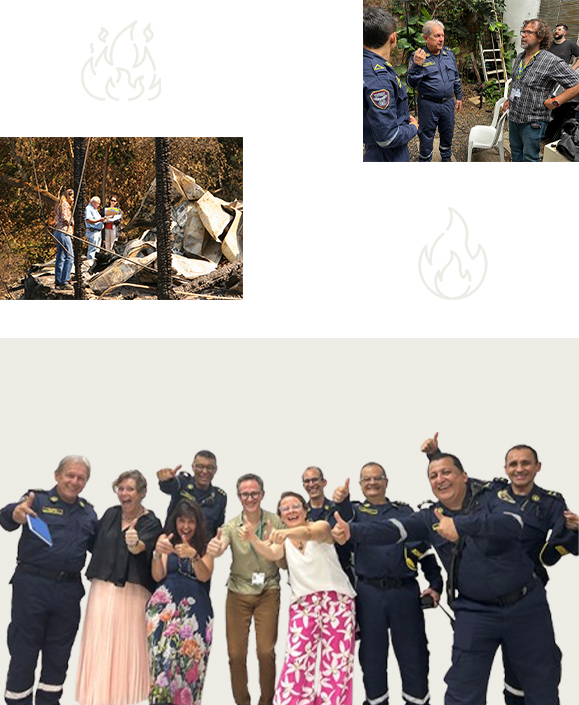
The results of these exchanges will be leveraged to build local and national capacity to address immediate wildfire threats and build long-term wildfire resilience. This approach will be initially demonstrated in the Latin America and Caribbean region (in cooperation with the Colombian National Firefighting Academy), including hosting educational and knowledge sharing events for a diverse set of audiences. The ultimate goal is to establish similar capacity-building hubs in the Mediterranean biome, Africa, Asia, and other regions.
The GWC is an initiative spearheaded by the Conservation Biology Institute, an NGO that provides advanced conservation science, technology, and planning to empower our partners in solving the world’s critical ecological challenges
Our Charter Members
Charter members of the Global Wildfire Collective are an interdisciplinary team of fire science and ecology researchers, social scientists, policymakers, fire practitioners, and firefighters. We share a common goal to safeguard ecological and social communities.
Our Partners
It takes a (global) village to tackle the complex, rapidly changing issue of wildfire in ways that protect both human and natural ecosystems. We are proud to have a strong and growing group of partners supporting and contributing to its work
Our Pillars of Focus
Wildfire research and management span an immense range of topics, scales, and disciplines. However, to bring focus and foster meaningful collaboration, we define four key pillars of concentration to organize discussions and partnerships
Global wildfire activity has oscillated for millions of years in response to cycles of climate change and human uses of fire. However, the earth’s systems are now in a state of rapid change, driven by the interconnected forces of climate change, land-use transformation, biodiversity loss, and human activity. .Altered fire regimes, in turn, have become both a fundamental cause and consequence of these changes. The term “Pyrocene” has even emerged to describe this new era of megafires and extreme wildfire events.
Fire plays a major role in shaping our environment and maintaining biodiversity. The alteration of natural fire regimes is leading to profound ecological transformations, posing serious threats to biodiversity, and risking species extinction on a large scale. Wildfires are also altering essential ecological services on which humans and animals depend, such as clean air and water supply, soil stability and fertility, carbon storage, ecosystem ecology, and more. It is estimated that 75% percent of terrestrial area on earth has experienced significant change to natural fire regime conditions.
Preparedness is critical to mitigating the impact of wildfires and enhancing the resilience of ecosystems and communities, and this pillar of the GWC is focused on the fire management and policy operations that are essential to achieve beneficial outcomes. The most effective preparedness efforts involve an interdisciplinary set of “before”, “during” and “after” actions carried out by community members, fire personnel, policymakers, planners, developers that are informed by the scientific and Indigenous knowledge of the region in which the community resides. This approach is known as Integrated Fire Management.
Recent studies indicate that socially vulnerable communities are disproportionately negatively affected by wildfire - both because they are more exposed to wildfire and because they are more susceptible to wildfire impacts. More research is needed to identify which groups of people are most vulnerable where, and why, so that wildfire preparation or recovery strategies and policy interventions are equitably and effectively designed, and resources appropriately allocated.