
Province records far fewer lightning-caused wildfires, but ‘well above normal’ area burned
This article, written by Josh Dawson from Kamloops News, features our charter member Mike Flannigan, who discusses the 2025 fire season in B.C. He warns




This article, written by Josh Dawson from Kamloops News, features our charter member Mike Flannigan, who discusses the 2025 fire season in B.C. He warns

On this podcast episode, our charter member Steve Hawks talks about the first “wildfire-resilient” community built in California, which opened just months after the raging
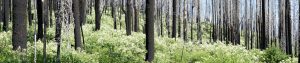
Abstract Many Mediterranean plants persist after disturbances by resprouting from dormant buds, and understanding factors driving variability in resprouting is crucial for predicting regeneration under

This article, written by Samantha Holomay from Nelson News, features our charter member Mike Flannigan, who discusses the relationship between climate change and wildfire.
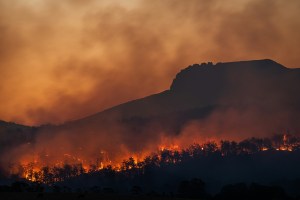
Abstract No single factor produces wildfires; rather, they occur when fire thresholds (ignitions, fuels, and drought) are crossed. Anomalous weather events may lower these thresholds

This article from the National Observer features our Charter Member Dr. Mike Flannigan and discusses;
Abstract The use of fire in agriculture has been a fundamental practice since early human societies, playing a key role in land preparation, weed control,

Abstract Retrospective analyses of fire danger typically use reanalysed data, but its relation to observed fire danger is not well researched. Here we use daily
Abstract Fire is a defining feature of our biosphere, having appeared when the first plants colonized the land, and it continues to occur across the

Abstract Wildfires that cross the wildland urban interface (WUI) are a major cause of property loss around the world. Recent disasters are likely exacerbated by climate change and continued