



Abstract
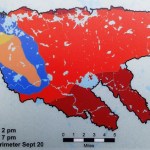
Widespread impacts of landscape fire on ecosystems, societies, and the climate system itself have heightened the need to understand the potential future trajectory of fire under continued climate change. However, the complexity of fire makes climate change impact assessment challenging. The climate system influences fire in many ways, including through vegetation, fuel dryness, fire weather, and ignition. Furthermore, fire’s impacts are highly diverse, spanning threats to human and ecological values and beneficial ecosystem and cultural services. Here, we discuss the art and science of projecting climate change impacts on landscape fire. This not only includes how fire, its drivers, and its impacts are modeled, but critically it also includes how projections of the climate system are developed. By raising and discussing these issues, we aim to foster the development of more robust and useful fire projections, help interpret existing assessments, and support society in charting a course toward a sustainable fire future.
Authors & Contributors


Related posts:
 Surviving in a hostile landscape: Nothofagus alessandrii remnant forests threatened by mega-fires and exotic pine invasion in the coastal range of central Chile
 Global plant responses to intensified fire regimes
 Exploration of large-scale vegetation transition in wet ecosystems: a comparison of conifer seedling abundance across burned vs. unburned forest-peatland ecotones in Western Patagonia
 The role of fire on Earth