



Abstract
Aim: The role of species’ demography and geography can be difficult to disentangle when projecting future population declineunder global change. By constructing and combining species-specific ecological models for plants in a fire-prone Mediterranean-type ecosystem, we explored how demography and geography can differentially affect population projections of plant species inthe coming century.
Location: California, USA.
Methods: We developed a set of linked demographic-distribution models for six Californian plant species, representing a rangeof life history characteristics found in the California Floristic Province. These ecological models simulate stochastic populationdynamics to show how plant species might differentially respond to geographic patterns in climate change and fire regime sce-narios when considering species-specific traits. By integrating each combination of species-specific demographic model witheach of the other species’ distribution models, we assessed the role of habitat loss and demographic constraints in the populationdeclines of these plants.
Results: We found that all species experienced substantial population decline by 2085 under our simulations, with total species’abundances primarily influenced by habitat loss from climate and land-use change. Species’ demography had a larger influence on subpopulation-level dynamics, especially in areas predicted to have frequent wildfires.
Main Conclusions: Our research underscores that responses to climate change are shaped by the interplay between species-specific demography and geographic distribution. Though species distribution models may be able to predict changes in which areas will be suitable throughout species’ theoretical niche limits, species-specific population dynamics are critical to projecting how populations might change in abundance at more local scales. Conservation decisions should integrate both geographic and demographic factors to effectively address climate-induced threats at both regional and local scales.
Authors & Contributors

Related posts:
 Rethinking the agricultural use of fire and its influence on the occurrence of wildfire in high Andean communities of Cusco, Peru
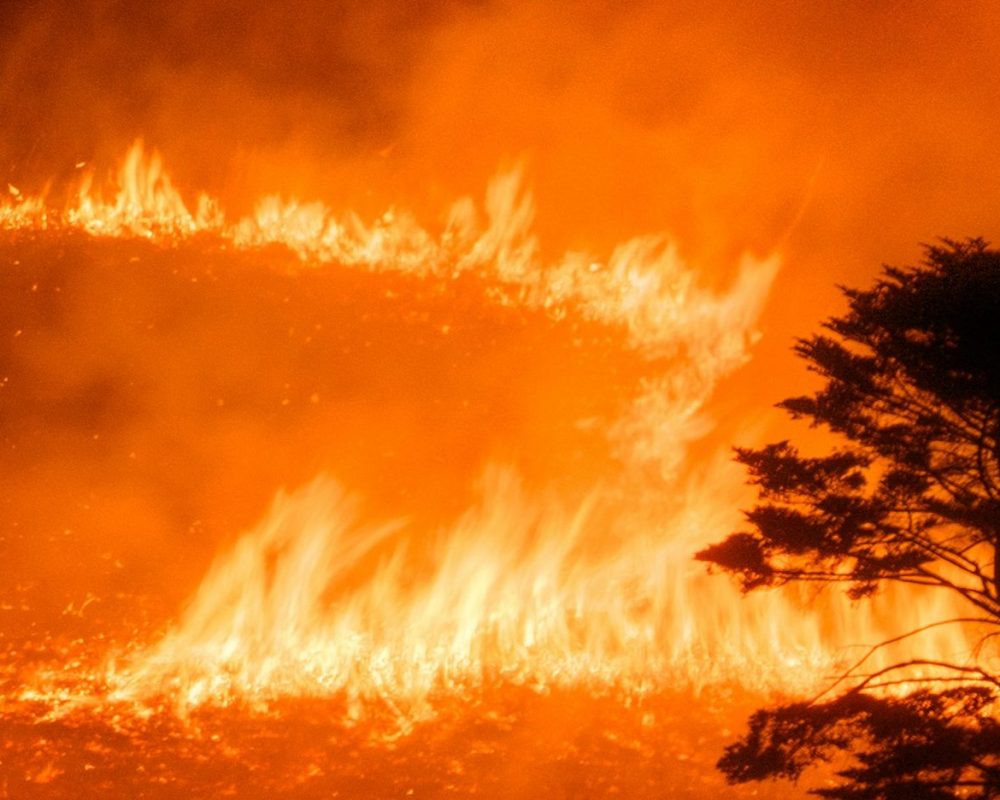 Chile’s Valparaíso hills on fire
 What does it take to survive? An expert elicitation approach to understanding the drivers of fire Refugia occurrence and persistence
 U.S. Emergency Management in the 21st Century: From Disaster to Catastrophe