


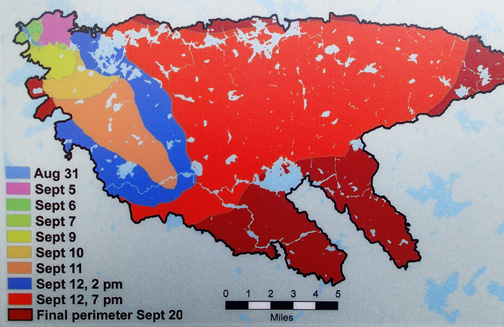

Fire simulators are computer programs that represent the key processes of fire spread, based on mathematical models of the physical processes of combustion and landscape fire propagation. The complexity and pace of change in fire regimes, science and technology pose challenges to the effective development and use of fire simulators. In this review, the research team addresses the nature of current fire simulators, their most common uses, and how to judge their performance.
The authors find that fire simulators can be classified based on their underlying modeling approach: physical and quasi-physical, empirical and quasi-empirical, and coupled fire-atmosphere models. They find that faithful representation of fire spread and its drivers remains a primary focus and is being addressed through improved input data, spread models, and more robust validation standards. However, evidence suggests that fitness-for-purpose may be a more flexible and effective basis of simulator performance as it is able to incorporate both technical and contextual factors.
Authors & Contributors

Related posts:
 Rethinking the agricultural use of fire and its influence on the occurrence of wildfire in high Andean communities of Cusco, Peru
 What does it take to survive? An expert elicitation approach to understanding the drivers of fire Refugia occurrence and persistence
 Human activity augments lightning ignitions to reshape fire seasonality across all biomes on Earth
Causal analysis of fire regime drivers in California
Human activity augments lightning ignitions to reshape fire seasonality across all biomes on Earth
Causal analysis of fire regime drivers in California