


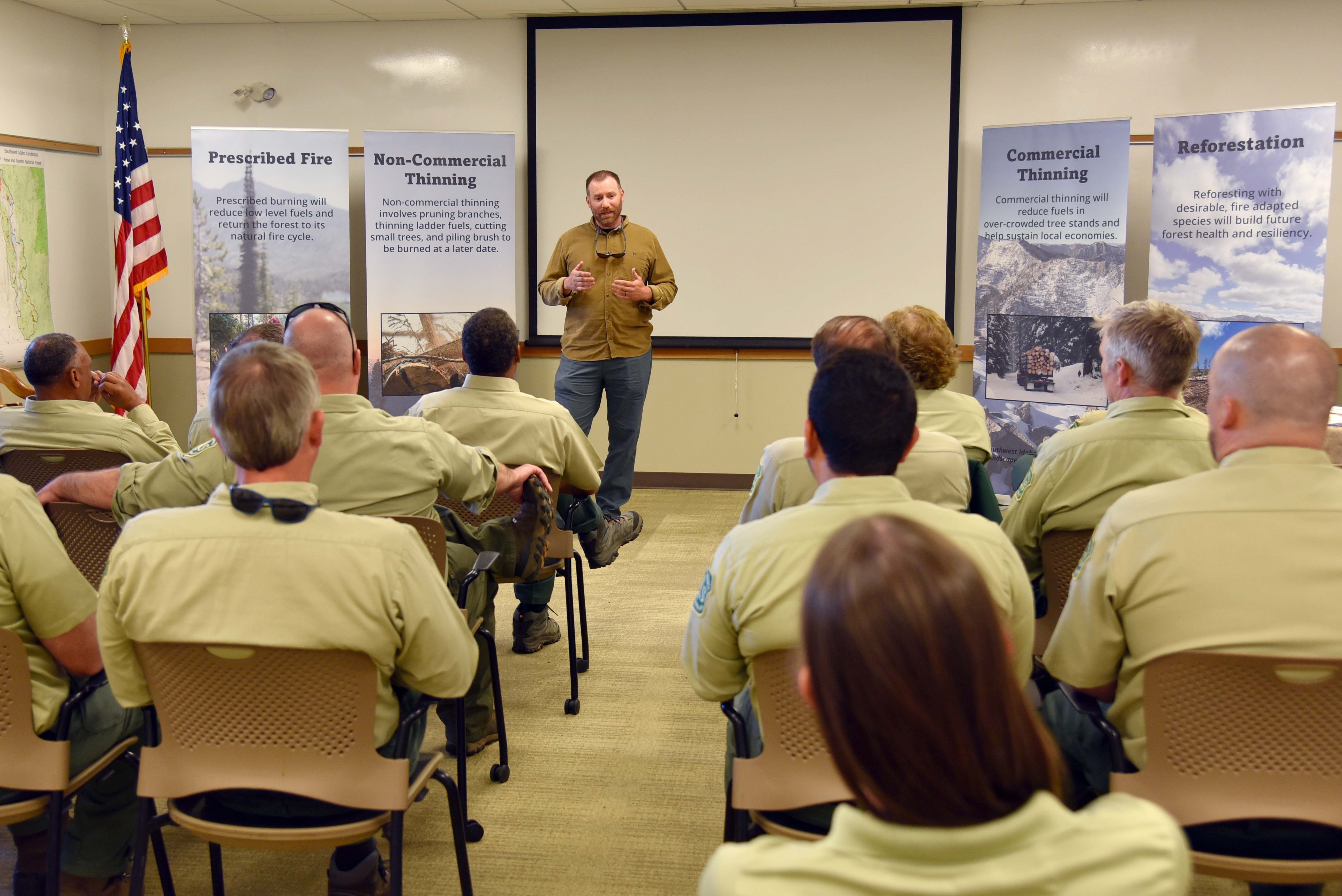

As governments invest more into wildfire adaptation, a central challenge is ensuring that the pace and geographic reach of new initiatives match the capacity of the communities and organizations expected to carry them out. This study seeks to characterize the challenges associated with efforts to rapidly accelerate the pace and scale of wildfire risk reduction through a single case study of Southwestern Idaho.
The research team identified three key lessons specific to Southwest Idaho: 1) place-based collaboratives and regional partnerships have complementary strengths that suggest scale-dependence from local to landscape-scale wildfire adaptation; 2) rapidly scaling wildfire adaptation can introduce challenges even when funding, policy attention, and shared risk-reduction goals are in place; and 3) challenges associated with scaling up from place-based collaboratives to regional partnerships can be interpreted through the sociological framework of social entropy. Findings suggest that achieving landscape-scale wildfire adaptation through federal initiatives need longer and more flexible timelines. Perhaps more importantly, increasing the “pace and scale” of wildfire adaptation depends on sustaining the continuity of non-federal networks already collaborating within a region.
Authors & Contributors

Related posts:
 Surviving in a hostile landscape: Nothofagus alessandrii remnant forests threatened by mega-fires and exotic pine invasion in the coastal range of central Chile
 Exploration of large-scale vegetation transition in wet ecosystems: a comparison of conifer seedling abundance across burned vs. unburned forest-peatland ecotones in Western Patagonia
 In the right place at the right time: Microsite and sowing season drive post-fire restoration of an endangered conifer
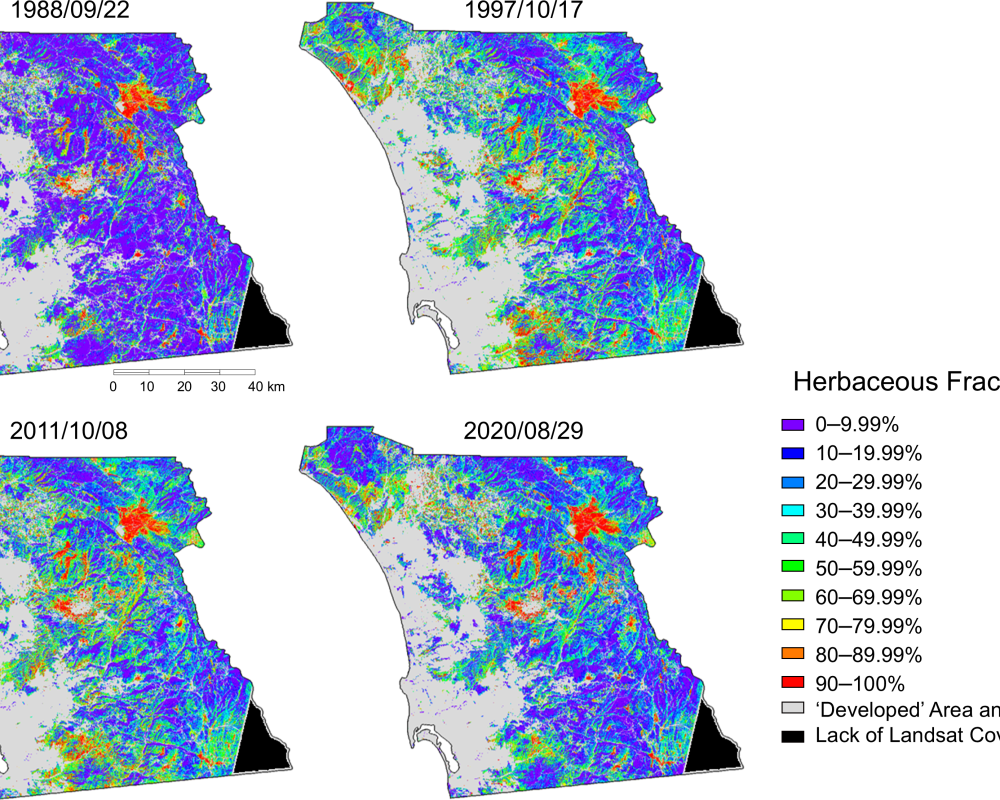 Association of herbaceous fractional cover and wildfire ignition in Mediterranean-type ecosystems